

Who among you Digital Seguro readers has ever seen a Meteor Shower? Perhaps if you live in the Northeast, you have certainly had the privilege of seeing this beauty of nature, but between us, 2020 is being a year with many unusual things, isn't it?
We are saying this because we are indeed experiencing many events in just a few months. It wasn't enough to just have the coronavirus, which came to change all our structures, we are also having to face other crises such as mass unemployment.
Hotels, restaurants, and pubs are all closed indefinitely. And we don't know when this will end, but we have some good news to share today that goes beyond COVID-19.
This is the meteor shower that occurred in the early hours of Wednesday, April 22, 2020.
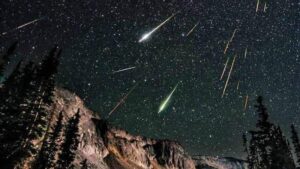
Scientists say this is the first meteor shower
We spent the early hours of Tuesday (21) to Wednesday (22) following the first intense meteor shower in the Southern Hemisphere in 2020.
It was a true light show thanks to the Lyrid meteors, which are the product of cosmic dust left behind by comet C/1861 G1 Thatcher on its path around the Sun.
Researchers say it is common between April 16th and 25th, the rain occurs every year and is the oldest ever documented by humanity —
There are 2,500-year-old Chinese texts that reference the phenomenon. Its name is related to the constellation Lyra, which is its radiant—the point in the sky where the observer can see the beginning of the meteor shower.
Mystics say the event is about a renewal of energy on earth.
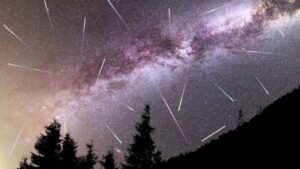
Thousands of people have seen the phenomenon in Brazil—even without using specific sky-viewing instruments. For a good view, the best option is to be somewhere with low light.