

The Doria government in São Paulo has been doing a very interesting job of combating the new coronavirus and managing the state to avoid falling into complete chaos. His measures have been criticized and praised by his followers.
But we know that yes, the Brazilian economy, supported by the Big House, that is, by those who have more money, would not allow businesses to remain closed for a long time, right?
A relaxation of the quarantine was expected next month, as several first world countries have been doing, however, we need to understand that no cure for Covid-19 has yet been found, therefore, after reopening the economic sectors, understand that it will still be necessary to follow the WHO's distancing recommendations.
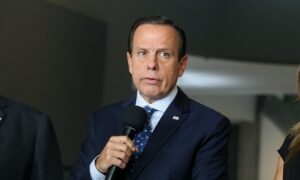
The Dória government says that the reopening of schools is not yet planned.
Although the government has released the parameters for the gradual end of social isolation, it has not made clear what goals it will work towards within each of them in the so-called São Paulo Plan, presented as a confluence of suggestions from the economic and health teams.
Strategic plans predict that the state will have a death toll of approximately 3,500 in the first week of May and currently assess that there are signs that the state is "flattening the curve" of Covid-19 infections, which means slowing the spread of the disease so that hospitals can handle the demand.
Remember, however, that the pandemic situation is fluid, and health protocols and scientific conclusions are constantly changing in this case.
Therefore, Dória said that his team will monitor the spread, comparing possible scenarios for the virus's evolution, and new protocols will be defined based on the situation in each region of the state and each sector of the economy.
But don't celebrate too much, the governor emphasized that "the criteria for the new quarantine, starting on the 11th, will be different and in accordance with scientific data collected by cities and regions of the state."
Finally, it is known that the opening aims above all to resume economic activity, shaken by the restriction on movement, even though Doria claims that 74% of the São Paulo economy is operating.
Did you like it? Share it!
Source: Sao Paulo Secretariat