

The Brazilian 100% variety took almost a decade to be developed by Embrapa and has been gaining popularity among producers rural areas throughout Brazil. Tasty, seedless and productive: discover the BRS-Vitória grape. A new grape variety is being increasingly cultivated in the São Francisco River Valley, in Pernambuco, the BRS-Vitória.
However, it's popular because it's seedless and very sweet. Watch all Globo Rural videos. This cultivar is the result of crossing two genetic materials that are part of the largest vine collection in all of Latin America, located at the Embrapa Grape and Wine headquarters in Bento Gonçalves, Rio Grande do Sul.
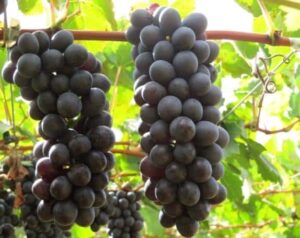
Improvement in genetics
Since the 1970s, the Brazilian Agricultural Research Corporation has been developing a genetic improvement program for Brazilian grapes, which has already released 21 varieties for wine, juice, and table use. BRS-Vitória originated there, was tested in São Paulo and Paraná, and then spread worldwide from the São Francisco River Valley.
It took Embrapa agronomists about 10 years to develop and test this new variety. Farmer Jackson Lopes, one of the pioneers in the field, recalls a blind tasting of 65 grape varieties seven years ago.
"It caught my attention, but it didn't have a characteristic that drew growers' attention because it had small bunches," he recalls. "But because it caught our attention regarding flavor preferences, we decided to invest in technical work to increase productivity," says farmer Jackson Lopes. José Fernando Protas, general manager of Embrapa Grape and Wine, believes the variety's success offers some lessons for future research.
"Not only the aesthetic aspect must be taken into consideration, but also the sensory aspect, in terms of taste and flavor, must be taken into account when creating a variety," he explains. And one of the things that most pleased the palates of those who opted for the Vitória grape was its seedlessness. "The important aspect is that the trace of the Vitória seed is not perceptible when chewing."
Created to be consumed
Therefore, its reproduction occurs through another type, another process, grafting, and not through seeds.” Grafting is the technique that consists of joining a plant with good roots and another that will produce tasty fruit, in this case, Vitória.
Farmer Marcelo Alves has partnered with Embrapa to produce seedlings of the variety.
Since then, he has only seen demand for the variety grow, rising from 72,000 seedlings in 2015 to 950,000 in 2019.
The researchers who developed BRS-Vitória themselves are surprised by all this delicious success. "Growing is the same as when you have children.
when it grows, it has its trajectory, we can't predict it many times," says Embrapa researcher and agronomist Patrícia Ritschel. 5 harvests in 2 years Another advantage of this variety is its rapid development from one harvest to the next.
This allows producers in the São Francisco River Valley to achieve the feat of harvesting delicious Vitória grapes every week of the year, but to do so requires drastic pruning, which exposes the vines to the sun.
Fast fruiting
It's performed 30 days after harvest. "For those unfamiliar, it seems like we've killed the plant, but from the moment of pruning to a new harvest, it takes approximately 105 to 112 days," explains farmer Jackson Lopes. Therefore, rapid fruiting is also a specific characteristic of Vitória, allowing it to produce up to five harvests in two years. Farmer Investment: Producers in the São Francisco Valley have already planted BRS-Vitória on more than 1,500 hectares.
Farmer Gilson Moreira is one of those excited about the grape's market potential, and so he is investing around R$1,400,000 per hectare in expanding his vineyard.
So far, the Vitória grape plantation on the property occupies an area of 3.5 hectares.
By the end of the year, it will be 7 hectares.