

Goiânia is known by many as the green capital. However, while in parks, for example, it is still possible to find several trees, research reveals. The same is not noticeable on the sidewalks and flowerbeds of some of the main roads in Goiânia.
The continuous decrease in afforestation to make way for commercial spaces, for example, in neighborhoods such as Centro and the Marista sector, was investigated in the doctoral research of the professor at the Goiânia Campus of the Federal Institute of Goiás (IFG), Fábio de Souza.
The study reveals that the removal of trees from sidewalks and flowerbeds in these sectors is the result of the conflict between the expansion of commercial use of the areas to the detriment of street trees.
In his thesis entitled Urban Afforestation and Healthy Cities: tree suppression index in the road system and its influence on the valuation of commercial properties, defended in 2019, Professor Fábio de Souza demonstrated tree suppression in regions in the Center and in the Marista sector.
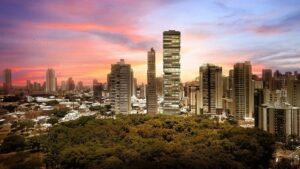
Tree Removal
Therefore, based on the analysis of maps and historical aerial photos of streets in these two neighborhoods, an index was developed to prove the relationship between the process of removing trees, especially from sidewalks, and the growth of commercial areas. The professor's doctoral research was also the subject of a report in the newspaper O Popular on January 6.
The research interest was to investigate changes in land use in the Central and Marista sectors. According to the thesis, some of the main roads in these sectors, which were previously used mainly for residential purposes, were progressively modified over the years due to the growth of commercial lots, resulting in impacts on the afforestation.
“Commerce is taking over everything”
“Naturally, in all cities, residential occupations occur first. After the people, businesses come. Businesses then take over everything. People end up being expelled, because the place loses its quality of life largely due to business. And, as commercial areas grow, space for trees, especially on sidewalks, also loses,” explains Professor Fábio de Souza.
For the study's investigation, the professor chose to analyze the section of the historical triangle in the Central region, known as the “Manto de Nossa Senhora”, which consists of the areas delimited by the Avenues Tocantins, Goiás, Araguaia and Praça Cívica. In the Marista sector, the survey area is comprised of the following streets: Avenida D, Rua 87, Rua 148, Avenida 136, Rua 90, Alameda Americano do Brasil, Alameda Coronel Eugênio Jardim, Alameda Coronel Joaquim de Bastos, Avenida 85 and Avenida Mutirão.
In addition, interviews were conducted with students, residents and merchants from the Central and Marista sectors. However, with the aim of evaluating people's perception regarding the relationship between tree planting and commercial areas, the research reveals.
The interview responses showed that most people would be willing to pay a higher price for goods sold in stores on streets with trees. In other words, the interviewees added value and valued the tree-lined streets.
Results
According to the research data, in the areas in the Central region, in 1961, there were 2,125 tree specimens. Therefore, 1,604 (75,48%) were placed on the sidewalks and 521 (24,52%) in the flower beds.
In 2016, the number of trees in the same region fell to 1,516 specimens, although there were 1,027 (48,33%) trees recorded on sidewalks and 489 (23,01%) on flowerbeds.
In this same location, in 1961, there were a total of 264 commercial lots on the roads of the Central sector, increasing to 725 commercial lots in 2016.
In the Marista sector, the total number of trees found was 4,282 specimens in 1992, distributed as follows: 3,280 (76.60%) on the sidewalks, 912 (21.30%) on the central flowerbed and 90 (0.21%) in the squares.
In 2016, the total number of tree specimens fell to 3,585, with 2,667 (62,28%) recorded on sidewalks, 834 (19,48%) on central flowerbeds and 84 (1,96%) in squares.
From another perspective, there has been an increase over the years in the areas of commercial use in the Marista sector. Although there were a total of 320 commercial lots in 1992, this increased to 1,455 in 2016.
Regarding these changes, the professor highlights: “The Center has been losing trees for a long time. But the Marista sector has lost a lot. It was a sector full of trees and today, practically the majority of the trees are only in the squares.”