

In addition to the entire social and economic context, the people of Espírito Santo have a special relationship with coffee production and harvesting, passed down from generation to generation.
Later, with the union of several actors, they managed to remove the State from the ranking of worst coffee in the world, a position it held until the end of the 1990s.
At the same time, they have become one of the best and most awarded in the country today. They have gone from being a commodity coffee to a quality coffee.
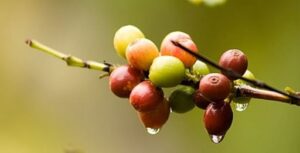
This change was not only in coffee production, but in the quality of life of producers and their families, and accelerated the development of the season.
Although the volume of precipitation has been quite high in some areas, agents consulted by Cepea have not yet reported significant problems in the crops.
Harvest Production
Even so, many agents already expect the harvest to start a little earlier, compared to last year, between the end of March and the beginning of April.
Between March and April with Robusta production, and between late April and early May for Arabica. As for business, it remains quite slow in the domestic physical market.
However, with the devaluation of coffee prices last month, producers withdrew from the market. Therefore, many coffee farmers are capitalized at the beginning of the year, due to sales made through December at more profitable prices.
Likewise, marketing has been restricted by the needs of buyers, with some negotiations taking place above “market” prices or between exporters themselves.
This is a bumper coffee harvest, as predicted by Conab—the market's guiding institution. That's assuming there are no unforeseen events (climatic or otherwise with significant repercussions).
In principle, it could be the largest harvest in the history of coffee growing in the state of Espírito Santo, exceeding 15 million bags, a step forward for the economy. Holy Spirit.