

In Janaúba, north of Minas Gerais, a 12,000-liter reservoir was installed in the prison to raise tilapia, in order to guarantee a profession for prisoners. southeast.
Still, enriching the diet of children and the elderly, since the prison unit's fish farming project began in January, in partnership with Emater-MG.
The Technical Assistance and Rural Extension Company, together with the São Francisco and Panaíba Valleys Development Company, joined the Project.
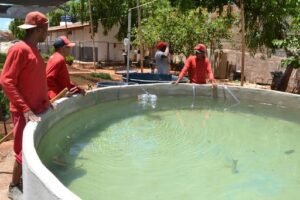
Since the masonry tank where the tilapia are growing, since they were placed in the form of fry (baby fish), was built by four inmates.
Development
With guidance from Emater and financial funds released by the Court of Justice, the appeal, worth R$1,400,000, included the purchase of the first 150 fry.
Since training prisoners and providing food are the responsibility of Codevasf, it hired a zootechnician to provide basic guidance.
The professional will go to the Janaúba Prison every 15 days to check the health conditions of the fish and teach about fish farming.
The person responsible for monitoring and supervising the work activities of inmates is the prison production manager, Romildes Mendes.
However, Romildes highlights the interest and dedication of the four interns who built the reservoir and continue with the project. “They are very committed, even without any experience.”
Certainly in six months, the tilapia will be ready for slaughter and will enrich the menu of four institutions in Janaúba.
Among the institutions are: São Vicente de Paulo Asylum, Dom José Mauro Project, Gente Inocente Daycare Center and Janaúba Support House.
Nutritious Menu
Although entities already benefit from vegetables produced in the prison, the vegetable garden cultivated in the unit is now irrigated with water from the fish reservoir.
At the same time, the vegetable garden and fish farming have already begun to bring encouragement and hope to the project's inmates, in the Janaúba region.
In short, in the region of Janaúba and Nova Porteirinha there are 130 families dedicated to fish farming and producing around 20 tons per year.
The fish are sold in the North of Minas.