

The Brazilian government and health experts are surprised by the World Health Organization's recommendation regarding the priority and effectiveness of mass testing.
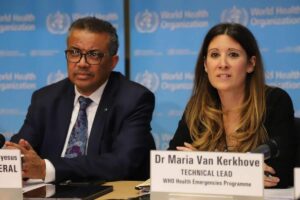
Last Monday (17) the World Health Organization (WHO) reported that the way to contain the pandemic is through mass testing of suspected cases of coronavirus. During a press conference, the doctor of the organization's health emergency program, Maria Van Kerkhove, said: “The central message is: test, test and test”. According to her, it is not possible to stop the pandemic if we do not know who is infected.
The message is new for the Brazilian government, which until now had adopted the application of tests only in more serious cases requiring hospitalization.
“We were not expecting this determination,” said São Paulo State Health Secretary José Henrique Germann in a press conference earlier this afternoon. “I am surprised between the ideal world and the real world. It is one thing to make tests available, and another to perform them,” said infectious disease specialist David Uip, coordinator of São Paulo’s Coronavirus Contingency Center. “We will see how the Health Minister [Henrique Mandetta] reacts to this situation,” Uip added.
Tests in Brazil
In Brasília, João Gabbardo, executive secretary of the Ministry of Health, responded by maintaining the policy that the country was already adopting: “We will maintain our position. Testing in places where there is community transmission, serious cases and hospitalized people,” he said. “I find it very strange that the WHO would recommend this, since there are insufficient supplies to test everyone,” he added.
João Gabbardo said that the government is studying the possibility of importing rapid tests for the new coronavirus (Sars-Cov-2) into Brazil.
Mass testing was carried out by countries that managed to control the pandemic. This is the case of South Korea, which has adopted a strong testing plan since the beginning of the disease's emergence in the country. Tests were carried out not only on people with symptoms, but on everyone who had some type of contact with infected people. In order to further contain the spread, the South Korean government began visiting the homes of potentially infected patients. In this way, it carries out more than 15,000 tests per day.
A study conducted by Chinese and American scientists has shown that in China, undetected infected people accelerated the explosion of cases of the disease. Using a mathematical model, scientists were able to show that most of the infections in China were caused by undetected patients. And that it was only after the lockdown that these invisible infected people reduced their potential to spread the virus.
Social isolation as a solution
In the view of infectologist Rosana Maria Paiva dos Anjos, a public health specialist and professor at PUC São Paulo, the only way to truly contain the coronavirus pandemic is isolation, not necessarily confirmation of the disease. “As an infectologist, I am certain that the best thing to do is to test only serious patients. Those with respiratory problems should stay at home, avoid going out, wear masks and wash their hands,” she said. For the infectologist, indiscriminate testing will only generate panic and increase costs for the health system.
Situation in Sao Paulo
In São Paulo, the epicenter of the disease and the place with the first recorded death, the governor, João Doria, announced containment measures. Museums and cultural centers will remain closed, elective surgeries in public hospitals have been postponed and, in the capital, Mayor Bruno Covas declared a state of emergency. With a set of measures, including the suspension of the car rotation, the prohibition of any public or private event and a work shift scheme home office for the servers to work. As the days go by, the number of coronavirus cases in the municipality increases from 40% to 50%, said Covas.