

Paula Facó sold soups on weekends, as she always looked for sustainable alternatives to replace plastic packaging in Ceará.
The opportunity to develop a product for this purpose arose by chance after she was selected through the Public Notice of the Creation Laboratory of the Ivens Dias Branco School of Social Gastronomy.
As a mentor to Adriano Mattos, an analyst at Embrapa's Biomass Laboratory, the Ceará native created a biodegradable plate made from banana production waste.
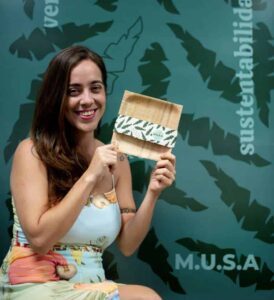
Since research for the development of the piece was produced in 2019, Paula worked for seven months in search of a simplified, sustainable production process.
Raw material
Thus, the banana tree pseudostem was chosen as the raw material for making the dish from the MUSA line (Sustainable Materials and Utensils for Food).
In fact, the genus of Musa banana trees soon gave rise to the name of the project, which was built with products from the organic banana plantations in the quilombo. North East.
As a reward for the work carried out in the community, Paula will promote several workshops for the residents of the quilombo in Ceará.
So much so that the topics covered: bread production; alternatives for two main ingredients produced in the region, banana and jackfruit; a mini-course on sales on social media.
Now, in addition to Paula, seven researchers, selected through the Public Notice of the Laboratory of Creation in Food Culture and Gastronomy, worked on projects related to different themes.
Sustainability
As an example to get an idea, Isaac Moreira worked on a “Tempero Cearense” obtained from cowpeas and papaya.
Iury de Melo created products using the full range of inputs from artisanal fishing.
Mateus Ferreira highlighted the production of batiputá oil in the Tremembé indigenous community of Barra do Mundaú, in Itapipoca.
Fernanda Soares created a fermented plant-based cheese made from cashew nut waste.
Vicente Monteiro developed yeasts from the Caatinga biome and finally Marina Antonácio developed a manual for creating Zero Waste kitchens.