

The government has made R$290 million available to pave 272 kilometers in the region. Although producers in Mato Grosso are still in the Northwest of Mato Grosso, the Pro-Logistics Movement has noted the precariousness of the highways. This is the case in the region and the hard life of those waiting for the asphalt.
Although there are already federal resources to start the paving, residents still have to live with isolation and unemployment caused by the lack of accessibility.
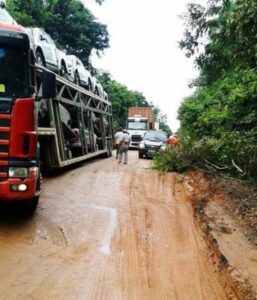
villain highway
The poor conditions of the BR-174 in the northwest of the state make the highway the villain of the region. Cattle ranchers in Juruena saw the price of cattle plummet by R$3.00 since the nearest slaughterhouse is in Juína, MT, 160 kilometers away.
The meatpacking plant became unsustainable due to so many mud holes along the way, explains cattle rancher and president of the Juruena City Council, Antônio da Silva.
Anderson Silva's family lost three sources of income when the city's meatpacking plant closed. That was his and his wife's income as employees of the industry and also that of a cattle truck car wash.
The couple's dream of having their own business went down the drain six months ago. The R$60,000 investment to set up the car wash didn't even pay for itself.
In addition to Juruena, four other municipalities in the northwest of Mato Grosso are located along the BR-174. However, they face the same difficulties in transporting timber and cattle from producers in Mato Grosso. The expectation is that the scenario will change in the coming months.
Paving
However, the resources to pave the highway are already secured: R$290 million to pave 272 kilometers. Thus, these cities between the cities of Castanheira and Colniza.
The agreement between the State and the federal government was signed in April of this year and the work should begin in the first quarter of next year.
The municipality of Colniza is larger than the entire state of Alagoas, with a herd of 450,000 head. As such, it does not have even one kilometer of asphalt. A beef cattle dealer and producer from Mato Grosso, Carlito dos Santos survives thanks to his own trucks that transport the animals from Colniza to Cuiabá.
In the rainy season, when the meat packing plant doesn't even come to pick up the raw material, he hits the road, even though sometimes the loss is inevitable.
Through the MT Integrado program, the State must also pave the access roads from the cities of Cotriguaçu and Aripuanã to the connection with BR-174, eliminating the mudflats that also harm the local economy.